Showing posts with label Veterinary Care Specialists. Show all posts

The Tale of Two Frogs

>> Sunday, May 18, 2014


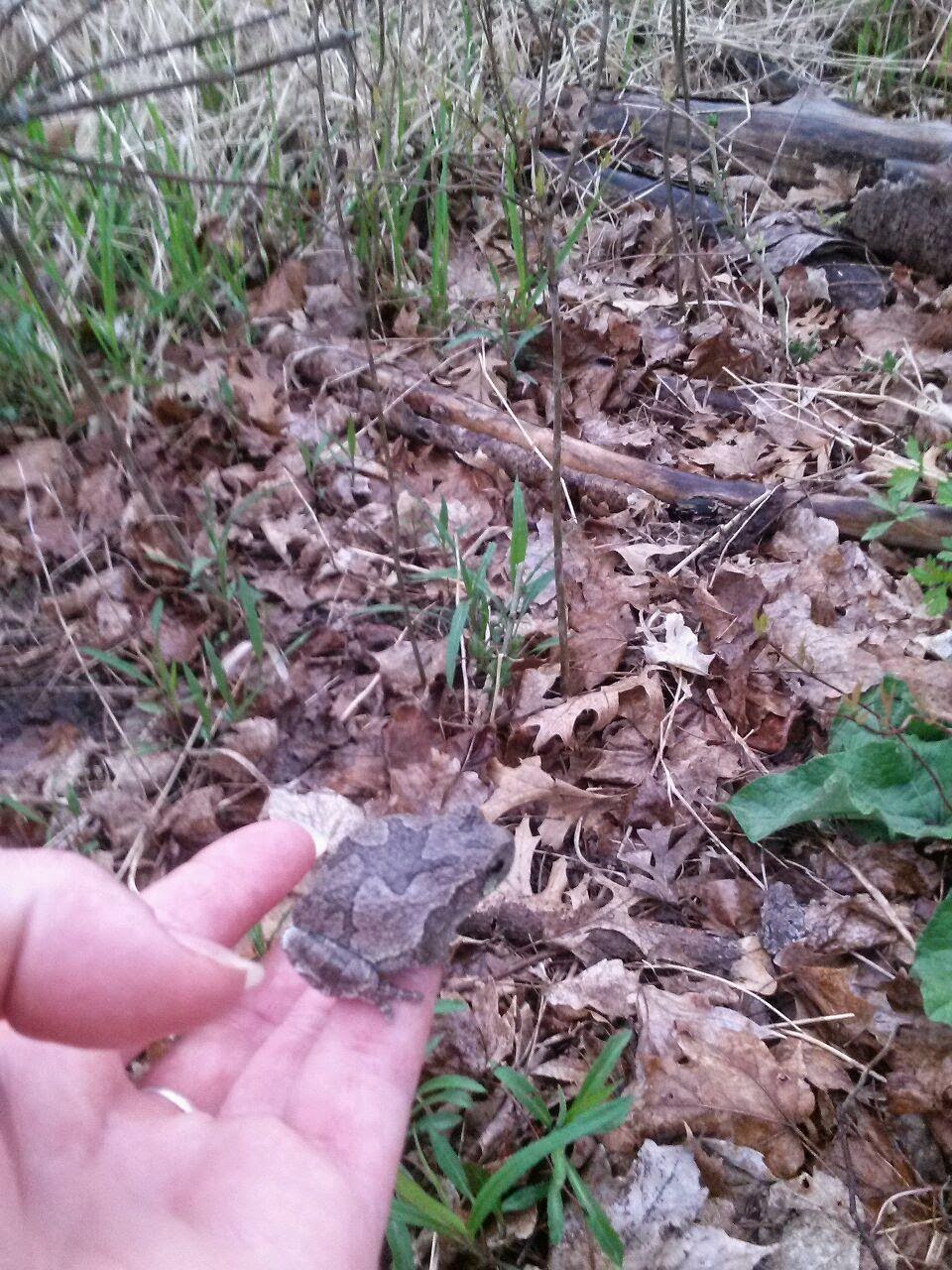
This January a woman called our office rather upset. She explained that she just noticed that her house plant had two, tiny frogs living in it! Obviously, it was not the right time of year to just release them and she didn't know how to care for them. Could we help?

Fortunately, we not only have Dr. Schmidt Dexter, who is highly trained in exotic pet care and wildlife rehabilitation, but we have a technician, Edi, who is a herpetologist. They assured her that they could help and encouraged her to bring the frogs to the office. When the tree frogs arrived they were very inactive, which was appropriate for the time of year, and they appeared healthy. They were identified as Gray Tree Frogs, a species indigenous to the area (meaning that they normally inhabit the wetlands of Michigan) and once spring came they could be released. The duo went home with Edi so they could safely continue their hibernation.

About a month ago Edi told me that the little frogs, whose cage was being kept in her bedroom,  suddenly began to sing. It appeared that the pair consisted of a male and a female and the male has a very shrill chirp (you can hear it on YouTube by searching Gray treefrog calling) that woke her abruptly from a deep sleep and left the whole house a little startled. Evidently it was getting close to time for their release.

Once the evenings were more consistently warm, the pair returned to our hospital for release. We are lucky to sit adjacent to a wetland and it seemed only right that they enjoy the beautiful habitat around our hospital. The hospital has extensive gardens, we don't use any chemicals on our lawn or flowers and during summer evenings our windows are literally plastered with all kinds of frogs. The charming couple was successfully released in the evening about 2 weeks ago. We  hope that they continue to thrive and reproduce. Who knows maybe we will see them on our windows, catching bugs, one evening this summer!


Read more...

Dogs and Cats Are Not For Everyone

>> Sunday, February 10, 2013


I cannot imagine living in a home without pets. I am sure my house would be much cleaner, my gardens more pristine, but it just would not be the same without them.  It would be so quiet, so dull. The sound of the cats as they move about. The dogs as they jostle for position on the couch. The sound of the sugar gliders on their wheel. Yes, I said sugar gliders. We have two and two tortoises as well. 

There are so many different animals that you might adopt, depending on who appeals to you the most.The first thing to remember about the exotic pet is that there is more care and up keep than your average dog or cat. Just because they are not as demanding and they live in a cage this does not mean that they don’t require daily care. They need companionship, variety in their environment, special diets, and often specific environmental temperatures in order to flourish. Typically, these pets are not appropriate for children since they are fragile and need special care. If you are planning on caring for the pet with your children, making it a group project, that’s great! But remember, many of these pets, as long as they are well cared for, can live for 10, 20, 50 + years. Make sure you all are prepared for a long term commitment.  

Exotic pets, just like dogs sand cats, require regular veterinary care with annual examinations and check-ups when ever you feel they are not well. As I mentioned these creatures are fragile and get sick very quickly. Nutritional deficiencies are common problems and are difficult to correct once the pet is sick. Visiting with a veterinarian that has special training in exotic pet care can help get you and your pet on the right track. 

At our hospital there are staff members that work with reptile and amphibian rescue groups. It is amazing how many of these expensive and at times rare pets are surrendered or even released by owners that were not prepared for the responsibility of caring for these pets. Be sure you are well educated and willing to accept all the responsibilities that are included in caring for another living creature!

Here is some brief information about some of the exotic pets we see at our office. It is certainly not a complete list and be sure to visit many web sites and check out books at your local library so you are well informed. Let’s begin with the sugar gliders, ours are named Violet and Lizzie.

Sugar Gliders are nocturnal and marsupials. They are originally from the rain forests of Australia, Papua New Guinea and Indonesia. However, they are bred in captivity here in the U.S. They have a furry section of skin that extends from their ankles to their wrists and it allows them to glide through the air. They can be very tame and great companions, but they must be handled and entertained often. They are very social and it is best that they be housed with other gliders. They can live 12-14 years in captivity. They need a diet that has a great deal of variety, eating fruits, nuts, commercial kibbles, and protein from worms and eggs. Sugar gliders need a large cage with lots of toys and room to climb and jump (or glide!). When angered or stressed they do bite and even as youngsters you must work to acclimate them to being handled. I would suggest purchasing from a private breeder that hand raises the gliders or adopting from a rescue. 


The tortoise is an ancient species that can live more than a hundred years. Turtles can live several decades as well. Each animal needs a very specific environment with strictly controlled temperature and moisture. Diets must also be very specific and they must be fed, cleaned and interacted with daily! Tortoises enjoy getting outside or roaming the house, but safety measures must be taken. No animal wants to be confined to a cage all day, every day. All enclosures and tanks have to be sized appropriately and they need the appropriate bedding or water filtration for their 'house'. Make sure you understand the needs of the type of turtle or tortoise you are adopting. Some can be very difficult  and costly to maintain. 

Chinchillas can live 10 to 20 years and are originally from South America. They prefer a warm environment and enjoy the periodic dust bath. They too are nocturnal and require a special cage, periodic teeth trimming and a specific diet. They are very social. Rabbits are also social and live 10-15 years. They too do best when kept indoors and in a regulated environment. They enjoy being out with their people, but like chinchillas and sugar gliders, they must be supervised. Both have commercially available pelleted diets. The chinchilla enjoys hay and does not tolerate great variety in it's diet. Rabbits are able to have additional vegetables, hay and fruits. 


Snakes and lizards are very popular pets. I think they are among the ones that are either the most poorly cared for or the most likely to be surrendered. This is usually as a result of their owners tiring of them or the pet has become ill due to mismanagement. Snakes can live decades. They require special housing, temperature regulation and regular cleaning. They are typically fed live food. Lizards can be vegetarians or eat meal worms, bugs and sometimes birds, other lizards and snakes! Some lizards can live up to 50 years. They require very specific housing, temperature regulation and diets. 

Birds are wonderful pets and have very specific cage, temperature and feeding requirements. Birds, particularly parrots can be so long lived they survive longer than their original owners. They can be very social and enjoy interacting with people. Many birds can be taught to talk and sing songs. However, they are delicate and stress, poor diet and drafts can be fatal for birds.

The fact is, no pet is without major responsibilities. However, for all your hard work you can reap the benefit of their companionship. Be sure you do your homework before adopting one of these pets and have appropriate housing and food available for them when they arrive at their new home. Also, have them examined by a veterinarian skilled in caring for exotic pets and review with them how you are caring for your new pet, making sure you are both getting off to a good start.


Read more...

What is BAER (Brainstem Auditory Evoked Response) testing all about?

>> Sunday, October 28, 2012


What Is BAER (Brainstem Auditory Evoked Response) Testing All about ?

The process of hearing is extremely intricate. Whether the sound is loud or soft, high or low an incredible number of very intricate biological processes have to occur in a strictly choreographed manner. 

When you think about it, it is amazing that so many of us DO hear. There are such a multitude of places along the biological path of hearing where malfunctions can occur, it’s amazing that there are relatively few individuals that are deaf. 

Sound begins its journey into our senses, our consciousness, as waves transmitted through the air. These air waves then cause vibrations in the tympanum or ear drum. These sound waves move the ear drum and then move three tiny bones (the smallest bones in the body) that sit within the middle ear. This moves liquid within the cochlea, a spiral, sea shell shaped organ, of the inner ear. Another series of membranes are moved by the liquid which causes small, pigmented hair cells to move. These are receptors for the 8th cranial nerve (CN VIII). At this point the movement triggered by the sound waves is now conducted through the nerve and the brainstem as electrical activity within the skull. 


Dogs and cats, just like people, can be born deaf. This is typically due to sensorineural deafness or a dysfunction of the sensors that allow sound to enter the nervous system as electrical impulses (the hair cells). 

BAER testing is a hearing test. In veterinary medicine we cannot rely on the pets response to sound to check their ability to hear.  Dogs and cats with hearing deficiencies can depend heavily on vibration and visual input to compensate for their hearing loss. It can be very difficult to tell if a pet is completely deaf or even deaf in one ear. They are very capable in adapting and compensating for their disabilities.  Rather than depending on our observations (subjective analysis) we use BAER tests (objective analysis) to follow the sound as it is conducted from the inner ear to the brainstem. 

Few dogs are trained to raise their paw (or finger as a person would) when they hear a to a certain tone. BAER testing helps us analyze their ability to hear without relying on their conscious responses. BAER testing is easily performed on either an awake or anesthetized pet.  We recommend that the pet be at least 6 weeks old and preferably 12 weeks old for this test. When they are less than 12 weeks old there is a slight risk of false negative tests (this means that a hearing ear might tests as deaf). 

Each ear is tested separately and 3 small needles are placed under the pets skin, one at the top of the head, the next at the base of the ear being tested and the last, a ground lead, is somewhere out on the pets body. The needles at the base of the ear and the top of the head will record the electrical activity as it is conducted from those little hair cells into the brain stem.  Then an ear phone or ‘clicker ‘ is placed in the pets ear and it will emit a clicking tone at a volumes of 80-100 decibels. We use an 87 decibel sound. The machine then records each click as it is conducted along the 8th cranial nerve and on through the brain stem. 

A pet that has a hearing response on the BAER test will demonstrate a series of peaks that occur at certain time intervals on a graph. This is a normal BAER test.


If the pet has an inherited deafness or deafness as a result of damage to the inner ear and the hair cells within the inner ear , the test would have no peaks and would be flat(see below).


BAER testing can be used to check for other interruptions in the hearing process such as tumors of the 8th cranial nerve and damage of areas within the brainstem. 

At our office, BAER testing is performed on awake patients, we seldom find that we need to sedate or anesthetize puppies and kittens that are tested. Sometimes when more detailed tests are indicated or a pet is particularly uncooperative anesthesia can be used. 

BAER testing should be performed on any pet suspected of being deaf or one of the breeds listed below, prior to their being adopted into a new home. Deaf animals can make great pets and companions, but owners must be aware of their special needs so they can  learn to communicate with their new pet and train that animal adequately. This will allow the pet to avoid injury and learn to function well within the household. 

Dog and Cat breeds associated with reported congenital
 (inherited deafness)

Akita
French Bulldog
Springer Spaniel
American-Canadian Shep
German Shepherd
Sussex Spaniel
American Eskimo
Great Dane
Tibetan Spaniel
Am. Staffordshire Terrier
Great Pyrenese
Tibetan Terrier
Australian Blue Heeler
Ibizan Hound
Toy Poodle
Australian Cattle Dog
Italian Greyhound
Walker American Foxhound
Australian Shepherd
Jack Russel Terrier
West Highland White Terrier
Beagle
Kuvasz
Whippet
Bichon Frise
Labrador Retriever
Yorkshire Terrier
Border Collie
Maltese
Felines
Borzoi
Miniature Pinscher
European White
Boston Terrier
Miniature Poodle
White Cornish Rex
Boxer
Mixed Breed Dog
White Devon Rex
Bull Terrier
Norwegian  Dunkerhound
White Manx
Cardigan Welsh Corgi
Nova Scotia Duck Tolling Retriever
White Persian
Catahoula Leopard Dog
Old English Sheepdog
White Scottish Fold
Cavilier King Charles Span.
Papillon
White Turkish Angora
Chihuahua
Pit Bull Terrier
White American Shorthair
Chow chow
Pointer
White British Shorthair
Cocker Spaniel
Puli
White Exotic Shorthair
Collie
Rhodesian Ridgeback
White Oriental Shorthair
Dalmatian
Rottweiler

Dappled Dachshund
Saint Bernard

Doberman Pinscher
Schnauzer

Dogo Argentino
Scottish Terrier

English Bulldog
Sealyham Terrier

English Cocker Spaniel
Shetland Sheepdog

English Setter
Shropshire Terrier

Fox Hound
Siberian Husky

Fox Terrier
Soft Coated Wheaten Terrier


From: Dewey CW. A practical guide to canine and feline neurology 2003;Ames: Iowa State Press: 232.

Read more...

Taking Ownership of Our Pets Weight Problems

>> Tuesday, September 25, 2012


Pet obesity has become a major concern, like its human counterpart, it is considered an epidemic. The epidemic is becoming more and more obvious at our practice. The cause of this serious health problem is multi-factorial. Here is my view of what the main factors are:

  1. Lack of portion control- Our pet foods are better made than ever. They are yummy and are low in residue (meaning less poop for us to pick up), but we have to be very careful to follow the feeding guide lines. Did you realize that every food has a different set of guide lines?  This better, yummier food cannot be free fed. You have to feed your pet a fixed amount daily. Did you realize that the average house cat needs about 180 calories daily ? That is a 1/2 a cup of Meow Mix dry or if you are a fan of the more premium brands a 1/4 cup or less of their dry foods daily. If you feed canned food you might give your cat 2- 3 oz cans of Fancy Feast daily or 1/3rd of a 5 oz can of one of the premium brand foods, but no dry! Now think about this carefully, does that seem like a significant amount less than what you feed?  I know when I began measuring my dogs food with an actual measuring cup, they began shedding the pounds! 
  2. Changing pet foods is OK, but you have to adjust how you feed -As you read above, each food contains a different number of calories per can or scoop. Read the labels and do the math! 
  3. No schedule- Leaving food available through out the day can make pet care much easier. However it makes your pets health care very difficult. Our pets rely on us to provide their health care, that means knowing what a they are eating, if they are eating  and how much. Decreased appetite is often one of the first signs of illness and a free feeding schedule, particularly in a multiple pet household, makes an appetite change hard to appreciate. Regular, moderate meals may also aide in house training, preventing gastrointestinal upset, and increase the frequency of  your interaction with your pet. 
  4. Lack of Exercise - Our dogs and cats are leading more sedentary lives, just like we are. They look to us for their activity. If we are busy at the computer or at work, they are content to stay at rest. We have to be sure that they are staying mobile. Cats are the most challenging. However, playing with them, using toys to entertain them, moving food bowels so they have to seek out their food, and even taking them outside for fresh air and a stroll in the garden can help keep you both active. Regular play and walks for your canine friends  can benefit them as well.
  5. Inappropriate standards - Did you know that the average house cat should weigh between 8 and 10 lbs? Seems kind of small doesn’t it?  I think we have adjusted our expectations, thinking that the 12 pound and 15 pound cat is the new normal. Take a look at your dog. Can you feel its ribs as you pet him long the side of  his chest? You should feel the general contour of his ribs and when you look down along his back he should have a slight waist, it should not be straight line from shoulders to hips!

Our pets are completely dependent on us and we are responsible for their health. By ignoring the fact that this extends beyond the purchase of the newest, freshest and most organic pet food and not considering how much, when, and why the food is fed we are helping create problems like arthritis (this can be caused by obesity), cancer, hypertension, diabetes, joint injuries, heart disease, respiratory disease, skin conditions and a shortened life expectancy. Once these conditions have developed, it is far more difficult to correct them and the obesity that helped cause the illness. 

Along with changing how we attend to our pets diets and feeding schedule, we also need to be sure that they are getting exercise. We need to spend time with them, appreciating changes in appetite, body weight and conformation. These observations may not only tell us that they are gaining weight, but may alert us to changes in their health. Early identification of illness and avoiding health problems related to obesity could allow you both many happy years of companionship. 


Visit www.petobesityprevention.com  to read more about managing your dog and cats weight, calculating their caloric requirements and find out the caloric content of your favorite pet food. 

Read more...

Are Vaccines Still Necessary?

>> Sunday, August 19, 2012


Vaccines, whether they are for people or animals, have become a very controversial subject. They serve to protect us and our pets from life threatening illness. However, like any medication, they can also cause side effects in certain individuals. Basically, vaccines expose the patient to a small infection. This ‘infection’ then triggers the immune system to respond by developing antibodies or immunity to the infectious organism. Then, when the patient is exposed to a full blown infection, their body can effectively fend off the disease. Vaccines are created in such a way that they trigger that immune response, but spare the patient the illness necessary with a natural infection. 

One of the main reasons we do not see diseases like polio, canine distemper, and rabies in our communities is because of vaccinations. Vaccines reduce our risk of illness when we travel and prevent us from spreading those diseases. Even though certain diseases are uncommon or absent in our community, vaccination may remain necessary. 

The vaccines that are selected for a patient are variable, depending where they live and what our pets do and where they travel. Veterinarians have become better at selecting vaccine protocols to fit our patients. We have also become more prudent recognizing that yearly vaccine protocols are rarely warranted and that vaccine titers can be used to assess whether vaccination is even necessary. We have also become careful about how vaccines are administered. All these efforts help in limiting potential side effects.

Vaccine reactions are rare, however vaccination does carry inherent risks. Just as in people, minor allergic reactions, local inflammation, pain, local tumor growth, or even life threatening shock and anaphylaxis may all occur as a result of vaccination. These events are very uncommon and are far outweighed by the risks of disease. We have learned that vaccines should not be administered to patients that have previously suffered from immune mediated diseases or cancer since vaccines could cause these patients harm. 

Vaccines are important because infectious diseases still exist. The viruses and other infectious organisms we vaccinate against are a constant threat and they are changing and developing all the time. Vaccines and vaccine protocols are changing too. Also new diseases are emerging that warrant completely new vaccines. Major veterinary groups such as AAHA, AVMA and ACVIM have responded to the changing canvas of infectious diseases in our country and our expanding knowledge about our pets immune systems, by creating carefully crafted vaccination protocols. 

We at Veterinary Care Specialists and VCS Pets First have considered all the available scientific data and created a series of vaccine recommendations for the life of your dog or cat. These protocols can be found at www.vcsmilford.com or www.vcspetsfirst.com. Please visit these sites and, as always, feel free to call, email or visit our office to ask questions and learn more about the vaccines, the diseases they prevent, and what would be the best choice for your pet. 

Read more...

How a Veterinary Hospital Can Help Make a Community Sustainable

>> Thursday, August 16, 2012


Until earlier this spring, when I attended a land conservancy meeting, I had not really thought about the issue of a communities sustainability. Once you begin to ponder sustainability, you appreciate it is at the core of the survivability of any organism. It is a philosophical approach to the growth, development and maintenance of a community that could be applied just as easily to a living creature, a family unit, a regional economy, your own professional development or a country. Basically, in order for a community to be sustainable it has to have some very fundamental things like a healthy environment (clean water, clean air, etc), jobs, education, and infrastructure to support the jobs (government, good roads, community safety). 

However, to be truly sustainable a community needs more. It needs to be a place where people want to live. It needs to be the type of place where once you have grown up there you want to return to that place and raise your family, own a house and contribute back. The community needs people to continue to sustain the place that nurtured and nourished them when they were young. It also needs people to be drawn from other areas, because it is so desirable to live there. This is the most difficult aspect of being sustainable. However without jobs and roads, schools and good government, its almost impossible to focus on the less tangible issues like quality of life. Parks and recreation, wildlife preservation, festivals and fairs, art shows, museums, concerts and historical recognition events, all these things help promote our community by showcasing the things that are special in our villages and townships.They entertain those of us that live there and encourage others to consider visiting us more often or even moving to our community. 

Communities that care for  the less fortunate, the aged and the sick demonstrate kindness and empathy. Community outreach services, care of the less fortunate, and  efforts to support service organizations also create an environment of philanthropy that helps attract like minded people. These qualities aid in creating a sustainable community.

Sustainability is the name of the game for business owners as well. If the town that our business is located in cannot encourage new residents, new businesses, maintain infrastructure, or even keep the current inhabitants from moving, then the business will wither and die along with the community. 

Working to keep a community sustainable is not necessarily something that leads to remarkable immediate benefits. The efforts initiated in the present will reach far into the future, laying the ground work towards making our town more attractive, vibrant, and functional. Eventually the return for everyone involved can be significant.

So how does our little hospital help such a lofty cause? We are fortunate that we are located within a  very vibrant community and although we are in Michigan and near Detroit, parts of our community have found innovative ways of growing despite significant disadvantages. 

Like so many privately owned veterinary hospitals we do not have a large budget to devote to supporting community events, but we recognized we could begin by offering our time and our skills. We became members of the area chambers and supported them by attending their events. We joined two major service groups, the Rotary and Optimists. Both of these groups focus on improving the community. We also cared for any wildlife that we could. We either served as a conduit to a rehabilitation facility or we cared for them ourselves and released them. We all enjoy having a large wildlife population in our town and offering care to the injured aids in supporting everyones quality of life. Now we are fortunate to have a doctor that has advanced training in wildlife medicine and the management of exotic pets. One of the reasons she was attracted to our facility was because of our long history of stewardship to wildlife. 

When we can, we help sponsor things like the 4th of July fireworks show, art fairs and other festivals. Sometimes we have exhibits and provide information on pet safety and health care.

We have used our clinical skills and resources to help a local food pantry offer spays and neuters to their clients that cannot afford veterinary care. We have also made it our ‘pet’ project to help raise funds for the Pet Pantry so they can purchase dog and cat food and distribute it to families in need. We have had annual events like, Dogs Playing Poker and Santa Paws (photos with Santa) to raise awareness of the need and raise funds. 

Our hospital is starting a new initiative with Meals On Wheels. We are helping them distribute pet food to pet owners that can neither afford food nor have the mobility to seek additional services. These individuals rely heavily on that pets companionship. 

Our doctors have visited libraries, schools and career days with demonstrations about exotic pets or explaining what it is to be a veterinarian. We were the first veterinary hospital in the state and possibly the nation to distribute oxygen masks to local fire departments. 

It has taken years for us to establish contacts in the community and develop he programs we have in place. We now have other staff members that help in performing these outreach activities and they too have learned how enjoyable it is to give your time to the community and see the people and animals that benefit from their efforts. 

I think that one of the keys to a sustainable community and a thriving business is to act responsibly through volunteerism, utilization of your business skills to  benefit the community, and supporting public events. It does not necessarily have to be financially burdensome, nor does every member of your business have to participate. I am confident that when a business begins to work towards supporting its community’s sustainability, they both will thrive. 

Read more...

Dog Gone Day - Video Release!!!

>> Sunday, January 22, 2012

Please visit vmeo at the link below. Paige Erlich is an incredibly talented film maker and this film will be featured at the Mitten Film Festival in Royal Oak on the 7th of February. Please join us and see it on the big screen.

The film tells the story of a cable guy and his adventures with a number of different dogs. Paige really demonstrated her talent and patience by choosing to work with animals. The big white dog is our own Darwin, our family pet and a blood donor at the hospital. The harried business man is my wonderful husband, Peter. They both proved to be talented actors. Maybe they will be discovered along with Paige!
Enjoy....

Dog Gone Day from Paige Erlich on Vimeo.

Read more...

Santa Paws Visits Milford Power Station ! Next Visit December 11th

>> Sunday, December 4, 2011


We had a great day at the historic Milford Power Station, 225 w. Liberty, on Saturday the 3rd. Please join us on December the 11th from 12 PM to4 PM.Santa will return to benefit the Pet Pantry. Bring a cash or pet food donation for the Community Sharing Pet Pantry and receive a beautiful photo of your pet/family with Santa and a digital image on a DVD to share with your family and friends.

HAPPY HOLIDAYS !!!


Read more...

Lucky Louie!

>> Tuesday, August 2, 2011

Louie had been rescued from an animal shelter, lived with a woman, Meredith , who adored him and he was lost and then found through the kindness of a community. Louie is a very lucky dog. We all got to know Louie almost a month ago when he escaped Meredith’s parents house and began running. Not an unusual of a scenario, but then it got interesting. Meredith and a few friends began a Facebook page, Looking for Louie, and people began to learn of his plight. There were frequent updates of Louie sightings, organized search parties, a discussion of how to best capture him and many folks out with fliers. Louie was definitely on the move, some of the early sightings were miles away from where he began. Then he moved east to an area choked with lakes, parks and dead end roads. There was worry that he might be inside a large wilderness area called Highland Recreation. Then he was seen back in Milford, next he headed north and east. Each sighting was investigated and many people spent precious free time looking for the wayward canine. He was finally found last week. His rescue was challenging, but everyone persevered. He then came to our hospital for evaluation, re-hydration and some well needed rest. He went home with Meredith on Thursday. We all wish Louie well.

I think the thing that makes Louie the very most fortunate is that he was lost in our little community. I realize that it would have been preferable that he had not been lost at all, but if you’re going to need a little help from a group of kind hearted people, well then, this is the place. I grew up in Milford and Highland. Everyone knew each other or at least knew of one another when I was a kid. You were recognized at every shop and everyone made time to attend our parades. I thought most places were like my home ‘towns’. I left for school went on to internships and residencies and lived in a few different places. I am still a little surprised I ended back home, but I am so happy to be back.

Our community has done something amazing, even though we have grown in population, we have managed to stay small and still care deeply about each member’s individual success as well as our community’s success. We have been buffeted by a stunningly painful economic down turn that has left us all reeling. We have lost businesses and friends. But, we all have toughened up and pulled together, not apart. Those are the core characteristics of our little ‘cow town’ (that’s what a prestigious veterinarian told me Milford was when Peter and I announce we were opening our hospital in Milford), that made it possible for Louie to be returned to Meredith, for Community Sharing to reach out to so many families in need, even when times are tough we kept trying to help each other succeed. We were Louie’s lucky star and we should take a moment and reminded ourselves how lucky we all are.

Read more...

A Note From A Client

>> Thursday, July 21, 2011

Peter read this note at BNI a few weeks ago and there was not a dry eye in the house. Thought I would share it now...

I just want to say that I am more than appreciative with your clinic and above all Dr. Hass. Even though my true best friend Hunter did not have a good outcome I feel that he was on great hands and that your practice should be the example for all others. I do truly believe that he was in the best hands possible and that if I would have followed my own thought originally and took him to your clinic Hunter and I would be walking around the campground unleashed and right by my side without a care or distraction in the world because he was the perfect dog and you do in my eyes have a perfect practice. I am a small business owner as well and I truly have a ton of respect for the employees and Dr's of your clinic. You guys really set a standard. Thank you so much Dr.Hass, you were the piece of mind that I needed and I feel so much better after the conversations we had and your concern for Hunter...you are the best. Once again...you guys set the standard and thank you.
Jeremy Funke


Read more...

About This Blog

  © Blogger template Simple n' Sweet by Ourblogtemplates.com 2009

Back to TOP