Innovative New Bandage Cover

>> Tuesday, August 24, 2010


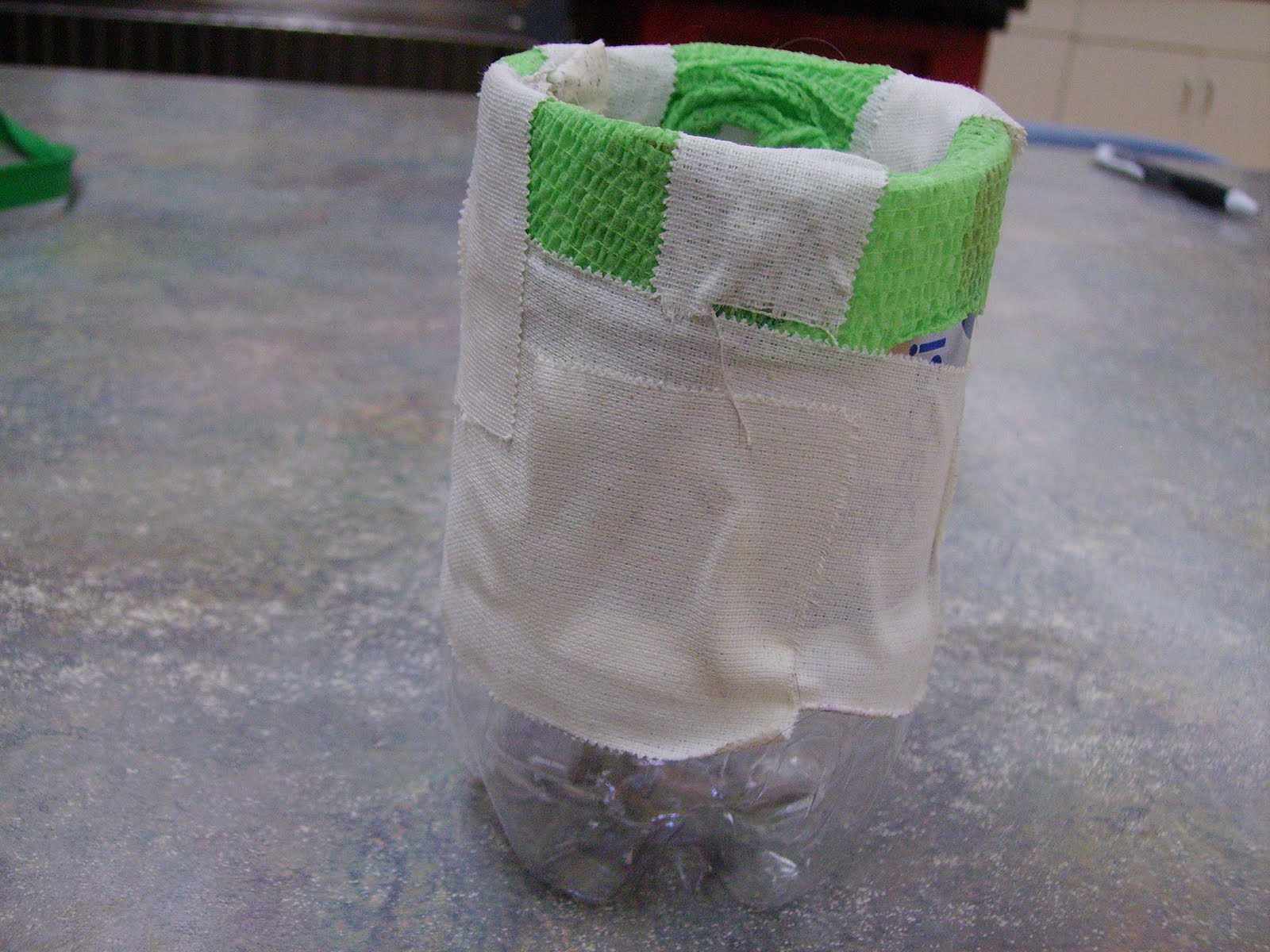
Here is a simple bandage cover that we came up with for a small dog that did not tolerate wearing a plastic bag cover. Commonly, in veterinary medicine, necessity is the mother of invention and it is hard to standardize things like bandage covers since each dog or cat is built a little different. It’s also nice to come up with an inexpensive option for clients rather than purchasing a nylon cover. We also managed to do some recycling!
The staff created a cover for this little dog using a plastic soda bottled and then cutting it to the appropriate length. Next they used Vetwrap and Elasticon or Conoform bandaging tape for the top so that there were no sharp edges and to create a tight seal so the bottle is slipped on and doesn’t come off until someone pulls it off. The cover is not permanent and is slipped on and off for the times the pet is going outside. Leaving any kind of cover on too long will cause bandages to become moist and lead to infections and further complications.

Read more...

Unraveling the Mystery Of Flea and Tick Control

>> Monday, August 9, 2010


Michigan is my home state. However, half my family hailed from a small town in western Arkansas just on the edge of the Ozark Mountains. Every summer we visited. It was a wild place, a kids dream. Thick woods, horses, goats, cows, snakes and wily farm dogs that roamed freely as there were no neighbors for at least a mile in all directions. It was a wonderful place to play and explore. The only hitch to outdoor exploration was the preparation. The bug spray, long pants and long sleeve shirts my mother, a native of Michigan, insisted we wear. In her estimation, Arkansas was a tropical parasite and insect laden, poisonous spider and snake infested waste land.

The perimeter of the farm house yard was treated with chemicals to prevent the encroachment of these pests and dogs were regularly doused with flea powder. But there were still ‘bugs’. The parasites and other threats were very egalitarian dog, cat, kid it did not matter. I recall a few episodes of chigger infestation that led to itchy, sleepless nights.

Back in Michigan no one knew what a tick or chigger was and fleas were an infrequent bother. As time has passed, we travel more and we take our pets with us more often, and our winters have become warmer, and the pests that were isolated down south have crossed our borders. Recently, the whole of the Journal of Veterinary Emergency and Critical Care was devoted to emerging infectious diseases. I was struck by how many, of these increasingly more common diseases, were spread by flea and tick infestation. Many of these diseases are zoonotic diseases, that means that they are diseases that can infect people as well as their pets.

Over the past two summers, as we have been developing our general medicine and surgical service, VCS Pets First, I have struggled with counseling people about flea and tick control. I advocate the judicious use of all medications, including flea and tick medications and trying to achieve a balance between chemical use and adequate protection is a challenge. Our office recommends separating flea and tick medications from the heartworm prevention since there is no need for a flea control product, in most cases, from December to May. So, initially we offered a product that killed fleas and ticks for the spring and summer seasons, and then a separate year round heartworm preventative. However, I now feel we need to consider the risks carried by being bit by these parasites. Most flea and tick products act by killing the parasite after it has bit your pet. This is not very helpful if you want avoid the infectious diseases that are acquired by being bit or if the pet is allergic to fleas and their bite triggers allergic responses. This spring we changed our recommendations to a product called Advantix made by Bayer. It is topical, once monthly, it repels fleas, ticks and biting flies and is well tolerated. There is also a product that we suggest for cats and it does have a heartworm preventative, since cats that go outside should be protected from fleas, ticks and heartworm from April to November.

The choice of which product to recommend is not an easy one and it actually is not a decision that you or I should take lightly. Not all flea and tick products are of the same quality or efficacy. Recently I have had a few pets presented through the emergency service that have had serious reactions to flea products they purchased at the pet store or grocery store. Their choice was driven by the low cost and the claims that they did everything the more expensive product did. Here is how the ‘grocery store alternatives’ vary from the veterinary recommended products:
1. The chemical/drug being used – the cheap stuff has old school pharmaceuticals, they are strong and they have a small margin of safety, that means you are more likely to have problems with that drug than others because they have more potential side effects. This is exactly why the other products have been formulated, to create a product that is more safe and effective.
2. Topical flea and tick control products are not as tightly regulated as other medications. It is up to the companies to make the effort to provide the safe products. The companies that are true pharmaceutical organizations, that have ties to veterinary medicine, and a reputation to maintain go the extra step to be sure that their product is safe and adequately labeled so that professionals, ie. veterinarians, will support their products.
3. Higher grade chemicals, more research, accurate and complete labeling, all these things result in a safer product.

Keep this in mind when you are making choices regarding flea and tick control: The skin is the largest organ system in (or on) our body. Even if these chemicals remain solely distributed in the skin, they are affecting our pets whole body - by affecting a major organ system. Be careful, choose wisely.

Read more...

Unraveling the Mystery Of Flea and Tick Control

>> Saturday, July 24, 2010


Michigan is my home state. However, half my family hailed from a small town in western Arkansas, just on the edge of the Ozark Mountains. Every summer we visited. It was a wild place, a kids dream. Thick woods, horses, goats, cows, snakes and wily farm dogs that roamed freely as there were no neighbors for at least a mile in all directions. It was a wonderful place to play and explore. The only hitch to outdoor exploration was the preparation. The bug spray, long pants and long sleeve shirts my mother, a native of Michigan, insisted we wear. In her estimation, Arkansas was a tropical parasite and insect laden, poisonous spider and snake infested waste land.

The perimeter of the farm house yard was treated with chemicals to prevent the encroachment of these pests and dogs were regularly doused with flea powder. But there were still ‘bugs’. The parasites and other threats were very egalitarian dog, cat, kid, it did not matter. I recall a few episodes of chigger infestation that led to itchy, sleepless nights.

Back in Michigan no one knew what a tick or chigger was and fleas were an infrequent bother. As time has passed, we traveled more, our pets accompanied us more often, and our winters have become warmer, and the pests that were isolated down south have crossed our borders. Recently, the whole of the Journal of Veterinary Emergency and Critical Care was devoted to emerging infectious diseases. I was struck by how many of these increasingly more common diseases were spread by fleas and ticks. Many of these diseases are zoonotic diseases, that means that they are diseases that can also infect people as well as their pets.

Over the past two summers, as we have been developing our general medicine and surgical service, VCS Pets First, I have struggled with counseling people about flea and tick control. I advocate the judicious use of all medications, including flea and tick medications, and trying to achieve a balance between chemical use and adequate protection is a challenge. Our office recommends separating flea and tick medications from the heartworm prevention since there is no need for a flea control product, in most cases, from December to May. So, initially we offered a product that killed fleas and ticks for the spring and summer seasons, and then a separate year round heartworm preventative. However, I now feel we need to consider the risks carried by being bit by these parasites. Most flea and tick products act by killing the parasite after it has bit your pet. This is not very helpful if you want avoid the infectious diseases that are acquired by being bit or if the pet is allergic to fleas and their bite triggers allergic responses.

This spring we changed our recommendations to a product called Advantix made by Bayer. It is topical, once monthly, it repels fleas, ticks and biting flies and is well tolerated. There is also a similar product that we suggest for cats and it does have a heartworm preventative, since cats that go outside should be protected from fleas, ticks and heartworm from April to November.

The choice of which product to recommend is not an easy one and it actually is not a decision that you or I should take lightly. Not all flea and tick products are of the same quality, consistence, or efficacy. Recently I have had a few pets presented through the emergency service that have had serious reactions to topical, inexpensive, flea products they purchased at the pet store or grocery store. Their choice was driven by the low cost and the claims that they did everything the more expensive product did. Here is how the ‘grocery store alternatives’ vary from the veterinary recommended products:

1. The chemical/drug being used – the cheap stuff has old school pharmaceuticals, they are strong and they have a small margin of safety, that means the dose that is therapeutic can also be toxic in more animals than a product with a higher margin of safety. These drugs also have more potential side effects. This is exactly why the other products have been formulated, to create a product that is more safe and effective.

2. Topical flea and tick control products are not as tightly regulated as other medications. It is up to the companies to make the effort to provide the safe products. The companies that are true pharmaceutical organizations, that have ties to veterinary medicine and a reputation to maintain go the extra step to be sure that their product is safe and adequately labeled so that professionals, ie. veterinarians, will support their products.

3. Higher grade chemicals, more research, accurate and complete labeling, all these things result in a safer, more reliable, product.

Keep this in mind when you are making choices regarding flea and tick control: The skin is the largest organ system in (or on) our body. Even if these chemicals remain solely distributed in the skin, they are affecting our pets whole body by affecting a major organ system. Be careful, choose wisely.

Read more...
Mallard Duckling We Are Rehabilitating

>> Sunday, July 11, 2010


Two weeks ago Peter came into the treatment room with a fuzzy yellow duckling. The duckling had been crossing Milford Rd with his family (he was last in line) and an impatient motorist zoomed by, spinning him and scattering his family. He got some scratches to his head and was a bit confused. A Good Samaritan retrieved him and brought him to our door.

He is a week older in these pictures, even bigger now. My kids call him Rex, because his wings remind them if the arms on the T-Rex. He loves to eat daddy long legs, hopefully he will continue to thrive so he can be released.

Read more...

Pictures Of Our Homespun 4th of July Float

>> Wednesday, July 7, 2010


chrome://foxytunes-public/content/signatures/signature-button.png

The weather was great, classic, hot and steamy. We were at the front of the parade, it was still winding its way down Main Street when we were heading back to the hospital. We ran out of candy by the time we reached the Presbyterian Church!
The kids had a great time. Hopefully some folks took our message to heart. Isabella made a great Mother Nature.

Read more...

Come See Us At The Fourth Of July Parade, We are Bringing Mother Nature!!

>> Friday, July 2, 2010


Really, we are literally bringing Mother Nature, in all her regal glory.

The theme for this years parade is 'Green'. How ever you chose to interpret it. Kinda leaves you wondering how to hook that together with the Fourth of July, huh? Since I am head of marketing, and a few other departments, within our little business, I was in charge of the parade. I want you all to know that despite how the float looks, I did, tragically, put a significant amount of effort into it. I made lots of trips to the dollar store, convinced my daughter to dress like Mother Nature, recruited children into building the float, got my mother to alter Mother Natures dress, convinced my father to lend his truck as well as, and this was the tough part, I have had to convince my husband and business partner that it really is a good idea to get up early on a Saturday morning to drive a truck in the parade. It really is hard work manipulating everyone into doing my bidding!

Anyways, tomorrow is the big day. 11 AM, right down Main Street, in BEAUTIFUL Milford, MI. In case you are looking for us we will be #7 in the line up. Wave to Isabella (aka Mother Nature) and be sure to get some candy before we run out.

By the way, this parade is one of the many good reasons for living in towns like Milford and Highland. Grown people still build floats, we still have parades and we still have a sense of humor about the whole thing.

Read more...

Calming Pet's Fears Of Fireworks, Thunder, And Other Loud Things

>> Friday, June 18, 2010


The storm clouds are starting to form and thunderstorms are on the horizon. Lots of noise and rumbling, especially with the 4th of July around the corner. It is the season that harbors many of the things our pets fear. We’re unsure exactly what triggers all the fearful responses so many of our dogs and cats manifest around storms and fireworks .I think that for some pets it is a learned response. Possibly the result of one of the (human) family members getting upset with stormy weather. My mother is fearful of storms (still is) and every family dog throughout my childhood became frightened of storms and fireworks! Maybe it is a learned fear after being near a gun or a firework when it went off, startling the pet. Some pets may be bothered by the change in barometric pressure that occurs with storms, these pets are not necessarily fearful of fireworks or other loud noises. Animals acute hearing could also contribute to their intolerance of loud sounds. Maybe their fears are like so many of our own, they cannot be attributed to one particular event or trait.

If you have ever lived with a pet that is frightened of thunderstorms, you understand just how impossible it is to console them. The old technique for managing these pets was to sedate them, make them sleepy, but they were still terrified! This certainly wasn't a very kind management technique. Desensitization, playing a recording of a storm or fireworks for a pet at increasing volumes was also proposed to get the pet acclimated to the noise that they appeared to fear. As far as I know this approach was never very successful.

Now we appreciate that the f ear of storms and loud noises are just like any humans phobia. Regardless if they originate from personal experiences or an inherent ‘personality trait’ or a ‘psychiatric’ condition, we can utilize medications * that have anti-anxiety effects and we use nutricuticals or homeopathic remedies that are calming . One nutricutical that I was just recently introduced to made by Vetri-Science, called, Composure, is labeled for both dogs and cats. It contains Colostrum, the same thing that is in mother’s milk. It has a quieting, relaxing effect. We at the hospital were skeptical of this product until a few of us tried administering it to some of our ‘special needs’ pets. The results were remarkable.

For the storm phobic pets, there are a few other considerations. Clients have mentioned to me that their fearful dogs insist on getting into the car, being in the bath tub or staying down stairs by the plumbing and when they are allowed to rest in these areas, they become more relaxed. Some people have struggled to try to prevent their pets from going to these places with little success. Actually, the pet’s choice of locale is not as far fetched as you might think. They are seeking areas that are insulated or grounded, safe from the effects of the electrical storm. So if your dog is fearful of the impending storms, let them into your car, with some supervision, or help them into the tub, you might allow them some relief from their anxiety and it may give you a break from their pacing and panting.


*Remember, prior to initiating any drug therapies, your pet should be evaluated by its veterinarian or you should consult with your family veterinarian. Signs of sound sensitivity and anxiety could be indications of other illnesses and pets should be closely monitored whenever they are placed on a new medication.


Read more...

About This Blog

  © Blogger template Simple n' Sweet by Ourblogtemplates.com 2009

Back to TOP